Interview Guide
Whatever form your interview takes, it's important to be prepared and ready to make the most of it.
NAVIGATING INTERVIEWS
When you think of interviews, you might conjure up images of one-on-one meetings with professionals in suits, firm handshakes, and nervously answering questions about your strengths and weaknesses. Although this is one version of the classic job interview, the definition has grown and changed significantly in recent years.
Interviews are any official conversation between you and a professional in your desired industry. These conversations take place in person, online, and over the phone. They might be aimed at landing a new job or internship, or the goal might be to learn more about an industry or position. They can look like that traditional Q&A format, or they can involve presentations, exercises, or panels of potential team members. Whatever form your interview takes, it's important to be prepared and ready to make the most of it.

Students talking to professionals at the Connections Career Fair & Networking event.
Types of Interviews
It's not uncommon to be called back for three or more follow-ups, so you'll likely experience more than one type of interview for each position.
A popular technique that uses past behavior to assess a candidate
Focused on determining how your experience, aptitude, and personality fit with a team
Feature common behavioral questions
Consider your past experiences: How have you developed and used your skills? What challenges have you overcome using those skills?
A common creative interview structure that focuses on examples of your past work
The candidate will guide the interviewer through their portfolio to demonstrate skills, style, and creative potential
Think about how you explain your work: How have you developed your creative skills? What was the thought process behind your decisions?
Formally structured interview
All candidates are asked the same questions so that their answers can be compared
Tends to feel more like a test or exam than a conversation
Adds objectivity to the interview process
Also referred to as a meandering interview
Structured more like a conversation with an organic flow
Often feels more casual and can be a sign that the employer isn't sure what they want for the position
Take the lead and make sure to get your talking points in, focusing on your most relevant skills and experiences
Led by multiple interviewers
Interviewers are often made up of managers, team leaders, executives, and other team members
More nuanced and objective evaluation of candidates due to multiple perspectives
A chance to see how you fit within an established team
Typically given an advanced warning to prepare for a skill demonstration
An opportunity for employers to evaluate a candidate's skills in action
Can take on many forms such as presentations, design exercises, and mock-projects
THE INTERVIEW TIMELINE
-

Before the Interview
More than picking out professional attire, looking at the commute, or printing extra copies of your resume. Preparing for your interview also means understanding the position, the company, and yourself.
-

During the Interview
On the day of the interview, be sure to check the details one last time. Lead with confidence. It's normal to be nervous, but if they didn't like you and your work, you wouldn't have gotten an interview!
-

After the Interview
Staying in contact is a pivotal aspect of any post-interview strategy. Follow up, express your interest, and stay in the loop as much as possible as an employer makes their hiring decisions.
CCAD Career Services Interview Guide
BEFORE THE INTERVIEW

Start with Research
The last thing you want is to walk into an interview unprepared.
Your first research goal should be aimed toward learning about the position you're interviewing for.
Start with the job description. What does it tell you about the position? What do you still need to find out? What required technical and power skills might become interview questions? How do you measure up?
Take note of any required skills. Brush up on these when necessary and/or possible, and assume they'll come up in the interview.
Where does this position fall within the organization's structure or the team's hierarchy? How would you function in such a role?
Talk to people in and around your network who have worked or are working in similar positions. What skills do they utilize most? What attributes do they find are essential to the role?
Next, focus on the company/organization you're applying for.
Look at the company website, social media, press mentions, and employee review sites like Glassdoor. You want a well-rounded view of the organization, not just information from a single source!
Take note of their missions and values. Do your values and interests align? How can you contribute to their mission in this role?
Look at the individual interviewers and team members on LinkedIn or other social platforms. It's always a good idea to know about the people you'll be talking to.
Know the industry, not just the company. Refresh your awareness of industry trends and news, as well as the organization's position within the industry.
With your research, create a persona for the average employee at the company. What are their interests? What do they care about? What are their key characteristics? Be prepared to market yourself to this specific person.
This step is less about actually researching and more about applying your research to yourself, as well as taking stock of your relevant skills and experiences.
Review your work and educational experience, focusing on your accomplishments. Looking back at your company and position research, which of these experiences are most relevant?
Review your resume from top to bottom. The interviewer can ask you about anything on your resume, so be ready to talk about it and how it has all prepared you for this position.
Google yourself (because your interviewer probably will). You should be continuously monitoring your digital footprint, but it's a good idea to check that your public social media accounts are presentable before an interview.
One of the more dangerous categories of job postings you want to avoid, scams aren't really jobs at all. These are job postings, messages, and interview offers designed to obtain your personal and/or financial information.
You may already feel equipped to fend off common scams, but as scammers adapt, we must as well.
Examples:
Fake Check Scams:
These are common for freelance and virtual assistant job postings. A scammer will send you a check and ask that you part of it back. The funds will appear in your account as pending, but once you send the funds, the check will bounce, and you will be out the money you sent.
Re-selling Goods:
Re-selling products is a common side gig, but beware of job postings and offers for re-selling "opportunities". Scammers will have you pay for high-end products in bulk, but the package will never arrive, or the products will be low quality.
Fake Recruiter Scams:
Recruiters reaching out, unprompted, to entry-level creatives is unlikely. Scammers are posing as recruiters, promising jobs and opportunities, and collecting personal and financial information. Never give your information to a recruiter you didn't contact first, and never share your information without first doing thorough research.
Government Jobs with a Fee to Apply:
A common scam is posing as a government agency and asking for an application fee to apply for a position. Government jobs shouldn't have a fee attached to the application (though there may be a background check fee down the road) and are ALWAYS listed through official channels only.
Multi-level marketing schemes (MLMs), as well as their illegal counterparts--pyramid schemes, are no strangers to the public stage. You're probably used to hearing about MLMs being pitched in "Hey Girly!" messages on social media, and you may even know someone involved with one. What you might not realize is how common MLMs are on job boards.
MLMs are direct-selling businesses that pay commissions to participants based on sales and recruitment. Unlike scams, they are perfectly legal (so long as they don't cross over into pyramid scheme territory) but still highly controversial.
Regardless of your opinion on MLMs, it's important you know how to recognize them in the job market.
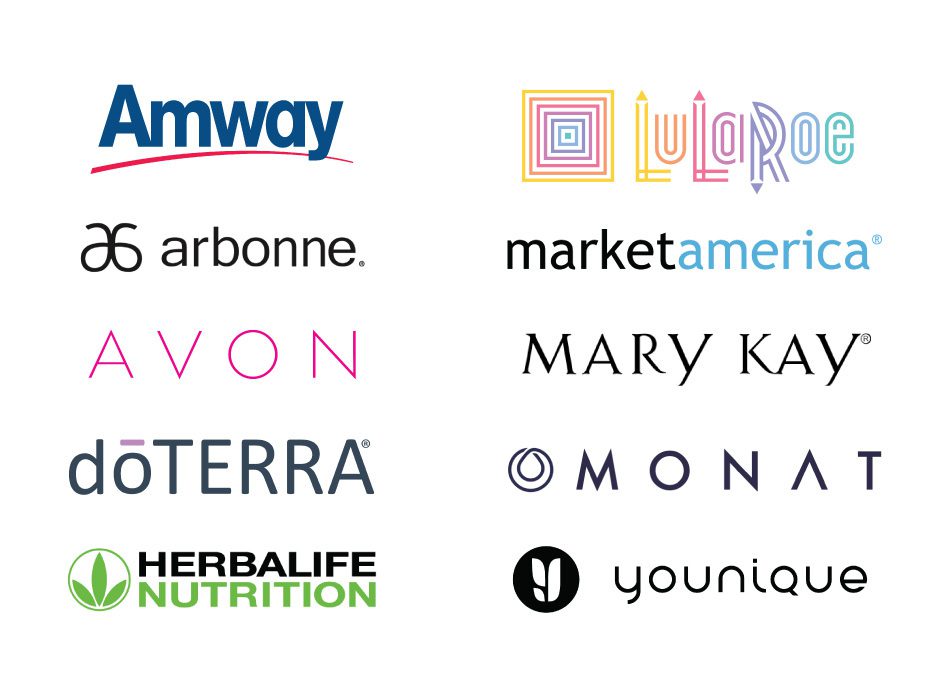
Examples (Keep in mind: This is not an exhaustive list, but a quick collection of some of the more common MLMs you may have seen around. If you think a company may be an MLM, do your own research or check out the MLM Master List):
Are All MLMs Bad?
Unlike pyramid schemes and scams, multi-level marketing is a legal and legitimate business structure. That being said, a business practice being legal is a pretty low bar. Still, maybe you know someone involved with an MLM who seems to be doing well, and you find yourself wondering if all MLMs are bad. This leads us to an important question: Is it possible to succeed in an MLM?
Short answer? Yes. Some make a profit working with MLMs, but that doesn't make them ideal working situations. The compensation tiers and emphasis on recruitment create a power dynamic that many criticize as being inherently exploitative. Additionally, because of upfront costs, the lack of training, and negative public opinions about MLM products, many people end up struggling to break even or in debt after working with these organizations.
Of course, you can find success stories within MLMs, but more often than not, you have to DIG to find them. When it comes to MLMs, success seems to be the exception, not the rule.
Lesser known than MLMs and scams, Devil Corps are another form of direct-sales organizations. They're characterized by commission-based pay, long hours, little training, and a heavy emphasis on team bonding. As direct-sales companies, they often entail door-to-door sales or cold calling.
Devil Corps are common on most job boards and are often advertised as marketing and brand ambassador positions rather than sales jobs.
When is Team Bonding Toxic?
Working with a team is an important part of almost any job, making team bonding and building essential. That being said, there are some situations (as with Devil Corps) where team bonding becomes toxic.
People in Devil Corps have reported feeling isolated and removed from their family and friends because of the demands of team-bonding events. It's this forced proximity and forced positivity that give these organizations a reputation for being cult-like.
Here are a few warning signs that team building has become more toxic than productive:
When it demands too much of your off time to the point of isolating you from your personal life
When fun events, retreats, and trips are leveraged to "make up for" a lack of benefits or balanced working conditions
When camaraderie is valued over safety and honest communication about team problems and issues.
Want more assistance or information on preparing for an interview? Email [email protected] to set up a meeting with a career coach.
BEFORE AN INTERVIEW
For info regarding accessibility and reasonable accommodation, please refer to the EEOC.
As you prepare for your interview, it's important to ask yourself this question: What is this employer looking for?
The answer goes beyond the job description (although that's an excellent place to start). You can safely assume that they're looking for more than simply checking all the boxes. Remember, everyone who receives an interview (and many who don't) is qualified for the job. Most of the time, interviewers are looking for less tangible, often ambiguous qualities and characteristics that make a candidate stand out.
On top of that, you'll want to figure out what you are looking for, too. What are your goals? your requirements for a workplace? The interview is your chance to make sure a position is a good fit for you.
Employer Goals & Objectives
In general, interviewers are looking for four things:
Job Fit: Do your skills, experiences, interests, and aptitudes align with the open position?
Team Fit: How does your personality mesh with the existing team? What value do you add?
Company Fit: Is your style in line with the company's? Do you have similar values and passions? Do you care about the company's mission?
Future Potential: Do you have the potential to grow and continue to add value to the team? Are you, as a creative professional, worth the investment?
What it looks like to measure up in all these categories looks different for each company, team, and position. That's why it is critical to do your research and learn about the company before your interview. You have to be more than simply qualified. You need to package yourself and your experience in a way that resonates with the interviewer and their team.
Growth or Vacancy?
| GROWTH | VACANCY |
|---|---|
|
|
No one can give you a set list of questions to ask in every interview (and I caution you against relying on the commonly asked questions provided by Google and LinkedIn). But, there are a few question areas you might want to consider to determine if this position is right for you.
Work Environment and Company Culture
One of the most important factors in determining fit is what your life in this role will look like. Tailor your questions to address any concerns and highlight the things that are most important to you. You may want to ask questions like...
What does the average day in this position entail?
How would you describe the company culture? How does it support employees?
What is your management style? What is the team's working/collaboration style?
How do you acknowledge employee success? Failure?
Work/Team Expectations and Priorities
You don't want to sign on to work for a team or organization that opposes your central values or has completely different creative priorities than you do. You'll also want to get a good sense of what they expect out of a candidate so that you can decide if you're ready to take on those expectations. Consider questions such as...
Can you describe what a successful candidate for this position would be like?
What key objectives do you have for this role within the first year? How will you determine whether a candidate is successful?
What motivates your team? What are your core values?
How does this team contribute to the organization's mission
Potential For Growth
People these days rarely work with the same organization for decades. However, you probably don't want to get stuck in a position with no potential for growth or advancement. To figure out if growth is important for an organization, you might ask...
How does this company reward employee excellence?
Are there opportunities for professional development? Is professional development a priority?
How does the company support the long-term growth of employees?
What routes for career development does your company offer?
Encountering challenging questions is inevitable. They might not come up in every interview, but eventually, you'll run into them. From bad questions to difficult questions to straight-up illegal questions, it's important you know what to do when faced with them.
Illegal Questions
It's illegal for an employer to consider your religion, political affiliation, race, gender, age, disability status, sexual orientation, or national origin/ancestry when making employment decisions. Asking after any of these topics in an interview, directly or indirectly, violates your legal protections.
There are some situations where a question might be technically illegal but asked without malicious intentions. An interviewer might be unaware they're venturing into illegal territory by alluding to any of the above topics in small talk or conversation. Regardless of the circumstances, you can choose whether or not to answer an illegal question, but know that you are never obligated to do so, nor is an employer allowed to hold it against you.
Obvious Illegal Questions:
Do you have a disability?
How many sick days did you take last year?
What prescription drugs are you currently taking?
How old are you?
Who did you vote for in the last election?
Will you be observing any religious holidays?
Where are your parents from?
What's the origin of your last name?
Where do you go to church?
Will you need to work around the school schedule?
Do you want to be referred to as Mister or Miss?
What year did you graduate?
Bad questions are challenging because of the way they're worded or framed by the interviewer. These are your leading, opinion-based, or just poorly structured questions. They're not asking you to explore negative traits, and they're rarely malicious. Typically, bad questions are a sign of a nervous or inexperienced interviewer, so try to respond with empathy and patience.
Leading Questions:
If you've ever been asked a question, or rather a statement, that started with something along the lines of "I'm sure you agree that..." then you've already encountered a leading question. In this case, your best response is to resist being led. Really think about the question they're asking and don't just agree because of the way the question was worded. Do you really agree with what they're saying? If not, don't be afraid to offer a counterpoint. Your interviewer might just respect you more for it.
Opinion-Based Questions:
The ugly stepsister to behavioral questions, opinion questions are rooted not in your experience, but in hypotheticals. These are questions that ask you to imagine how you would respond in theoretical situations. Theorizing is unlikely to be accurate or helpful for you or the interviewer. Instead, try to bring the question back to reality. Think of a similar situation you've encountered in the past and explain how you reacted. This turns an opinion-based question into more of a behavior-based question that's easier to answer effectively.
Poorly Structured Questions:
Sometimes questions are just difficult to understand. Whether their wording is confusing or the scope of the question is too vague or specific, you don't want to answer a question until you comprehend what it is they're asking. Don't be afraid to ask clarifying questions. Ask your interviewer to reword the question or to clarify the scope. If possible, you should also try to map down to the root concern the question is getting at and address that concern.
It might seem impossible to prepare your answers without knowing the questions they'll ask, but it's not! If you know what to look for, it's easy to predict the questions you'll be faced with. You'll want to rely on two sources:
Common Interview Questions:
There are a few common questions and question categories that feature in almost every interview. These are your standard "Tell me about yourself" and "Tell me about a time when..." questions. Keep in mind, just because these questions are generic doesn't mean your answers should be! Always be thinking about how best to frame your responses for a specific position/organization.
Skills in the Job Posting:
For questions that are specific to a position, you can find clues in the job posting. Take note of all the required skills (both technical and power skills) and assume your interview will ask you questions about them. Prepare your responses by thinking of an anecdote or example of a time when you used each of those skills in your work, education, or other relevant activities. It's important to not just know what you're going to say, but also how you want to say it.
Confidence is essential in any interview, and the best way to increase your confidence is to practice. It's not enough to prepare your answers in your head. You have to get used to explaining things out loud and to an audience.
Here are a few ways you can practice before your next interview:
Record yourself answering questions. Ideally, you'll want a video recording (not just audio) so you can evaluate and adjust both your wording and your demeanor.
Ask a friend or mentor to interview you. Having an audience changes things, and you don't want to get spooked in your interview because you only ever practiced alone! Don't forget to encourage your friend or mentor to ask follow-up questions so you can improve your improv skills.
Make a "Mock Interview" appointment with Creative Careers. Through our Handshake appointment portal, you can schedule a time to conduct a mock interview with a career coach.
Quick Tips
-

Prep Yourself
Craft a professional appearance that still feels like you. Look to industry professionals and see what they're wearing for inspiration.
-

Prep Your Commute
Visit the location before the day of your interview if you need to. Plan for the worst, consider traffic, and leave even earlier than you think.
-

Prep Your Materials
Always bring extra printed copies of your resume (and other application materials) and have any materials in multiple formats (physical and digital).
CCAD Career Services Interview Guide
DURING THE INTERVIEW

TYPICAL INTERVIEW RUNDOWN
Greetings and small talk
Introductions
Opening questions (e.g., "Tell me a bit about yourself")
Questions about your experience
Your questions and next steps

A student talking to a professional at the Connections Career Fair & Networking event.
During the Interview
Lead with confidence! If you've prepped well, you will have prepared stories and responses to many possible questions.
Aim to arrive at LEAST fifteen minutes early, and give yourself an extra cushion for traffic and other surprise setbacks. For remote interviews, join the meeting on time or a minute early.
Make sure your clothes are ironed or steamed, put together, and up to industry standards for a professional appearance.
Make sure all of your materials are ready. Print extra copies of your resume and any other requested materials.
Have an online copy of your portfolio, an offline copy, and even a print version if possible. You never know when technology will present unexpected challenges.
Breathe and be confident. It's normal to be nervous, but if they didn't like your work, you wouldn't have gotten the interview! You're already off to a strong start.
How you present yourself, from your voice to your behavior to your appearance, can have a significant effect in a job interview. Making a strong first impression is critical, so keep in mind these tips to strengthen your self-presentation:
- Behavior: Lead with a confident handshake and be sure to make eye contact. Avoid crossing your arms and always sit up straight. These are common pet peeves of employers to be aware of.
- Voice: Your voice is always an important part of how you present yourself, especially in phone screenings and remote interviews. Make sure you breathe deeply and speak with inflection, and don't read from a script. Even over the phone, you can tell.
- Appearance: Your clothes should be professional, neat, and up to industry standards. Look to other professionals working in the field. What do they wear every day? When in doubt, it's better to be a bit overdressed than underdressed.
Your Personal Brand and Message
Your message is where your brand, your audience, and the job requirements come together. You should already have researched your audience and studied the job requirements, but what about your brand?
Your brand is the characteristics and traits that you want to lead with in professional situations. Ask yourself, how do you want to be perceived by potential employers? What qualities, skills, and personality traits do you want to center? You should try to keep your brand aligned with what the employer is looking for, both in the requirements for the job and in terms of fit within the company culture.
Think of interviews like marketing. You want to present a product in a way that best reaches your target audience. In this case, you're the product, and your target audience is the interviewer. How can you best communicate the skills that are most important to the interviewer? How does the way you dress and present yourself align with your professional brand? Keep these ideas, your brand, and your message in mind as you prepare to answer questions in your interview.
To Lead or To Follow
The cadence of an interview, deciding when it's your turn to speak or to listen, can be a tricky balance to strike, particularly if you don't have a lot of interview experience. Knowing when to lead and when to follow your interviewers is a skill you can (and should) develop.
Before walking into any interview, you should be prepared to lead or follow, looking to your interviewer for cues. Open-ended questions, an abundance of conversational pauses, or a more conversational tone can all be signs that you need to take the lead and steer the conversation back to your key points. Don't let an interview meander without finding ways to interject anecdotes and mentions of your most important skills and attributes.
That being said, many interviewers take a more structured approach, asking pre-planned, pointed questions to find the best-suited candidate for the position. In this case, you may end up following. However, you should still find ways to interject the details that make you the best person for the job.
As a rule of thumb, default to leading until the lead is taken from you. This can show strong initiative, leadership, and communication skills.
Tips and Tactics
The central feature of most interviews is the question-and-answer session. You must know how to answer any questions thrown your way clearly, concisely, and effectively. This may sound like an impossible task, since you're unlikely to know ahead of time what questions they'll be asking you, but don't panic. Here are some essential tips for nailing the question-and-answer interview:
Have the answers ahead of time: Although you can't know exactly what questions an interview will ask you, there are ways to predict the direction they might go in. Look to the job posting and prepare examples for each of the skills listed, as well as any essential job functions you have previous experience with. You should also prepare answers to common interview questions such as "Why do you want this job?" and "Tell me about yourself."
Tell stories, don't list facts: They already have a list of your skills and accomplishments in the form of your resume. Interviews are about finding out who all those skills and experiences add up to. The best way to frame your most important traits and skills is through narrative. If you know they're likely to bring up a particular skill, think of a time when you used that skill in a professional, educational, or creative setting. Consider your actions, the outcomes, and any lessons learned.
Map questions to their root concerns: Ask yourself, what are they really asking? What is this question trying to determine? Figuring out the root concern or purpose behind a question makes it easier to structure an impactful response. For example, if they ask you something like, "Tell me about a time when you clashed with a coworker," the root concerns they're trying to uncover are your communication style and aptitude for conflict resolution. They want to determine how you'll function within a team, even when things are difficult. Your response should do more than answer their questions. It should address the root concern underneath.
Don't rush: It's okay to pause to think or collect your thoughts. It's okay to trip over your words. For the most part, interviewers expect you to be nervous or need a moment to think. You're only human, but so are they. They've all been in your shoes and can empathize with the pressure of sitting in the interview hot seat. Don't feel the need to rush through your answers or panic every time you hesitate. Slow down, breathe, and remember you've prepared for this!
Common Questions
Most of the questions in a job interview will be tailored to the position you're applying for. However, some common questions seem to be universal in interviews across different industries. It's easy to spend all your time preparing to answer job-specific questions and forget to prepare for the more general (but no less important) questions.
Here are some common questions to keep in mind:
"Tell me about yourself."
This is a common opening for an interview, but one that people often forget to prepare for. It's important to be intentional about your answer. Try to stick to three main points focusing on the past, present, and future. Summarize your relevant experience, current situation and standing, and goals for your future in the industry. As always, keep your audience in mind, tailoring your answers to this employer and this position. Be concise and try to keep your answer under a minute.
"What are your strengths and weaknesses?"
Knowing your strengths and weaknesses is critical for any job seeker from the start of your search to the final interview. But it's not enough to just know your strengths and weaknesses. You have to be able to articulate them to interviewers. Practice saying them out loud, preferably to someone else. Keep your strengths accurate and relevant, and don't make your weaknesses secret strengths. Instead, frame your weaknesses as areas where you are actively improving. Make it clear they won't be a problem for the employer.
"Why do you want to work here?"
Be honest, but strategic. Don't tell them you just want the job for the money, or give a generic answer with little thought behind it. Think of why you applied for this specific position with this specific company. Lean on your research. Your answer should show the thought and effort you've put into preparing for this interview and highlight a specific connection you have with the position and/or the company.
The most important thing to remember when you're answering behavioral questions is the power of a simple story. Creating a strong narrative is more compelling than simply sharing facts. Just like in marketing, an engaging story could easily be the factor that sways your audience.
That being said, you must learn how to structure an anecdote for a behavioral interview. Ideally, you want to have about 6-8 stories prepared that cover the required skill areas from the job posting and can be told in about a minute. Once you've identified the most relevant anecdotes you can share, you'll want to structure your responses in a way that's complete, concise, and easy to understand. Listed below are two methods for organizing impactful anecdotes for your next interview.
C.A.R. Method
Challenge:
What was the problem or situation you were faced with that required you to act? Give as much context as is necessary, but don't let the background overwhelm your narrative.
Action:
What did you do about it? What action or approach did you take to address the challenge you faced? Be specific about your role in the situation and the initiative you took.
Result:
How did things turn out because of the action you took? Be sure your result can be clearly related to your action.
S.T.A.R. Method
Situation:
Set the scene. What context is important to understanding the story you're telling? Again, be careful only to include the most relevant details.
Task:
What was asked of you? What did you need to accomplish in this situation? Make sure the skill the question is targeting is at the center of this task.
Action:
What did you do about it? What action or approach did you take to address the challenge you faced?
Result:
How did things turn out because of the action you took? Be sure your result can be clearly related to your action.
Tips for Choosing Your Stories
Pull examples from multiple experiences. If all of your stories come from the same position or situation, then your background starts to look a bit one-dimensional. By pulling from different experiences, you'll give the impression that you're capable of applying yourself and growing in a variety of circumstances and environments.
Include stories from education, activities, and community involvement. If you haven't used a skill in a professional setting, you can still craft an anecdote from using that skill in an alternative kind of experience. Particularly for current students and recent grads, it's important to remember your education is experience.
Keep half of your stories completely positive, and the other half negative (or challenges) with a positive spin. You don't want to come across as constantly getting into sticky situations, but you also want to illustrate your ability to correct mistakes and overcome difficulties. Discussing how you've learned from mistakes may also be valuable, as it shows you're continuously growing and ready to persevere.
Emphasize the present, but give context with the past. As with any good story, you don't want to bog down your answers with too many examples from the distant past. Focus on more recent experience, drawing on earlier anecdotes when necessary to add relevant context.
The portfolio interview is about going beyond your resume and insights from behavioral questions. This is your chance to flex your skills and past projects, show off your unique style, and explain how your unique creative edge would be a valuable addition to a potential employer.
Crafting Your Portfolio
Generally speaking, portfolios are curated collections of your polished creative work. Always put your best foot forward, keeping the projects you include both relevant and indicative of your skill set. You should be sure to continuously update and refresh your portfolio as your body of work and creative skill set build.
For internships and student positions, it's okay for your portfolio to be more of a work-in-progress. But when searching for full-time professional work, your portfolio should be polished, professional, and up to industry standards. Look to the industry professionals you want to emulate (brands you love, local agencies, etc.) and aim for your portfolio to measure up. Of course, depending on the phase of your career, your portfolio might not quite be able to compete with creative veterans and industry leaders, but it's always good to have a goal to reach for.
Presenting Your Portfolio
Generally, portfolio interviews take on one of two forms: reviews and presentations.
Portfolio reviews are often one-on-one interviews in which you review the contents of your portfolio with your interviewer. Reviews are slightly less formal than presentations and tend to have a more organic structure.
Portfolio presentations are often given to panels of interviewers. Presentations may be 30-40 minutes long with an additional 10-15 minutes of questions from your interviewers. They're more formal and require more in-depth preparation ahead of time.
In either case, focus on three to four projects in which you've had a leading role and are relevant to the position you're interviewing for. You don't need to walk them through every piece in your portfolio. Focus your attention on the most valuable examples and dig into the details.
Answering Portfolio Questions
As you prepare for your portfolio presentation, remember that anything can become a question. You should be ready to explain and defend all the choices you made in a project, from the research and preparation to the delivery of the final product.
Even though even the smallest detail may be used as a question, some topics are more likely to feature in the Q&A portion of a portfolio presentation. You should be ready to expand on...
The problem or objective
Your research and planning process
Your chosen solution or direction for the project
Areas for self-reflection or growth
Collaboration or teamwork in the process
NDAs, Copyright, and Giving Credit
Non-disclosure agreements (NDAs) and copyright law will likely impact almost every creative professional at some point in their career, so you need to be aware of how they affect your work and portfolio. Although we in the Creative Careers office are not lawyers (and we cannot offer you anything that constitutes legal advice), here are some things to keep in mind as you navigate NDAs, copyright, and giving credit in your portfolio:
Be specific about your contribution to a project. If you worked with a team, clearly outline what you were responsible for and which parts of the final product can be attributed to you. Never take credit for someone else's work, even by passively omitting details.
License and credit anything that's not yours. If you used texture packs, design assets, music, etc., in your work that you did not create, make sure you're properly licensing and appropriately crediting the original creators where necessary. The rules around giving credit and using particular licenses change from circumstance to circumstance, but when in doubt, it's better to give more credit than necessary rather than less.
Credit companies and be aware of NDAs when using work from past opportunities. If you made a design for a company, be sure to credit the company and look out for any NDAs attached to the project. Breaking an NDA can have serious consequences, so make sure you're clear on the terms before sharing any work.
Some of our sponsored classroom projects might include an NDA. If you have questions about an NDA project you worked on with CCAD, reach out to the Creative Collaboration team for clarification.
Copyright and intellectual property law are a major part of most creative industries. The last thing you want to do is come across as a liability because you broke or bent the rules in your portfolio.
Learn the rules! There's no way we can tell you everything you need to know about copyright, NDAs, and intellectual property. You need to take the lead and seek out this important information on your own.
At the end of most interviews, there's space left for you to ask questions about the position and employer. As common as this practice is, it's nearly as common for job seekers to neglect to prepare for this part of the interview.
Don't think of asking questions as optional. Instead, think of it as a valuable opportunity. This is your chance to clarify any details and decide if a position is a good fit for you. It's also an opportunity to show a potential employer how much thought and consideration you've put into the interview process, and a final opportunity to show off any research you've done into the company.
It's best to have about three questions prepared ahead of an interview. This way, if a question is answered during the interview, you have backups to lean on. You should avoid asking questions already answered on the website or in company materials, as this shows a lack of research and preparation. It's also a good idea to think of an additional question to ask during your interview to showcase your continued engagement.
Think of questions you might ask if it were your first day on the job to try to orient yourself in new surroundings. You may want to ask about things like company culture, routines, and team priorities. It's also a good practice to lean on your research, asking informed questions that are tailored not just to the position, but to the interviewer.
Always, always, always ask questions in your interview so that any potential employer can clearly see your interest and enthusiasm. Engaging and thoughtful questions can help you stand out in an employer's memory when it comes time to make hiring decisions.
Discussing Salary
Until recently, asking about salary or compensation in an interview was seen as unacceptable and a sign of a candidate with skewed priorities. More and more, this notion is being challenged in the job search arena. Now, it's reasonable to ask or clarify about salary upfront.
The Art of Discussing Salary
Financial transparency has become the expectation, not the exception.
Research the industry standards for compensation for the specific role. Be sure to factor in your experience level and location, and try to establish a range of average compensation for the role.
Sometimes, you can also find salary information for the company itself and even the role you're applying for. Websites like Glassdoor allow employees to self-report their salaries and can give you insight into what to expect before talking with an interviewer. Keep in mind, since these websites often rely exclusively on self-reported information, they may not be entirely accurate.
Always be prepared to take the lead. It's your responsibility to gather all the necessary details to make an informed decision about a position, including salary. You have to be ready to bring it up without prompting from the interviewer. Be upfront, but respectful. Don't dance around the subject or use vague terms. It's perfectly reasonable to want to discuss salary, so be direct while maintaining professionalism.
It's commonly considered acceptable to ask about salary in a first-round interview. Given how many rounds of interviews can go into the hiring process, it's better for everyone if you start on the same page about critical details like compensation. Typically, however, you'll want to wait until after a phone screening when you know you're being seriously considered for a role.
A good rule of thumb is to avoid going into an official, second-round interview without an understanding of compensation. You shouldn't expect to have a final number until you receive your offer, but you should know generally what to expect before committing to a lengthy interview process.
Despite growing acceptance of salary discussion in interviews, there are still those who are resistant to sharing such information before an official offer is made. You may need to know how to handle an interviewer who avoids, deflects, or refuses your request to discuss salary.
Refusal
An outright refusal to disclose salary is, in some ways, simpler to deal with than other forms of evasion.
If an employer is closed to the idea of discussing salary during the interview process, you have two options: continue the interview process without knowing, or move on to the next opportunity.
In the end, it's up to you. However, you may find that the more transparent an employer is about salary, the less likely you are to wind up with a lowball offer or stuck in a toxic work environment.
Avoidance
Avoiding salary discussions by offering wide ranges, postponing discussions, or being vague or evasive is a slightly different story.
In this case, you may want to push a bit for a clearer answer. It may be that your interviewer needs input from human resources or management before confirming salary. It may also be a sign that they think the budgeted compensation would discourage candidates.
Try to get a sense of why they're avoiding the question so you can better plan how to proceed.
Deflection
You may also encounter an interviewer who deflects the question back to you. For example, "What are your salary expectations?" There are a few options for responding to defection:
Answer their question with the range you researched before your interview. Be sure you're confident in these numbers before sharing.
Turn the question back around on them. "Until I know the full scope of the position, I don't feel comfortable setting a range, but I'd appreciate hearing what you have budgeted for the role."
Avoid answering and move on. Let them know you don't have expectations you're comfortable sharing at this stage and move on.
Unlike discussing compensation in general, negotiating has to wait until after you've received an offer. Until then, you have no leverage with which to negotiate. Wait until you receive that official offer and their finalized salary or hourly rate before you attempt to negotiate, but once you do, keep these tips in mind:
Be reasonable with your expectations. Ideally, you will have already been given a range for potential compensation. If you find that the range is far below what you're willing to accept, don't rely on the assumption that you can push for a much higher salary after receiving an offer. Start with a 10-20% increase and be ready to work your way down (depending on the feasibility of the starting offer).
It might be more difficult to negotiate in entry-level and highly competitive positions. In these cases, when you don't have significant industry expertise or the company has an excess of qualified candidates, your bargaining power is decreased. That doesn't mean negotiating is impossible, but you should be aware of your position in the conversation and ready to take on that challenge.
Always maintain professionalism and lead with respect. Be prompt with your communications and be respectful as you negotiate. Attempting to negotiate won't damage your reputation or standing with a company, but being pushy, unreasonable, or dragging your feet through the process absolutely will.
For more information on negotiating pay for entry-level positions, check out this Handshake Blog post that walks you through the topic!
But what about negotiating freelance rates? When you're a freelance artist, you're in the driver's seat when determining compensation. Unlike traditional employment, where someone else decides how much you'll be paid, you're in charge of setting your own rates. However, that doesn't mean you'll never need to negotiate.
Typically, clients will come to you with a budget in mind, and it won't always match up perfectly with the rates you've set. In these circumstances, it's up to you to decide if you want to work with them to adjust the scope of the project to match their budget, negotiate your fees, or pass on the project. Especially early on in your career, when you're still establishing a body of work, you might find yourself negotiating and adjusting your rates to attract a customer base.
That being said, don't let yourself be taken advantage of simply because you're just starting out. It's one thing to work with a potential client to compromise between your set rates and their budgets, so long as you remember your worth. Although you may not have extensive experience, your work is still valuable, and you should be compensated fairly.
CCAD Career Services Interview Guide
AFTER THE INTERVIEW

KEEP IN TOUCH
You want to follow up, express your interest, and stay in the loop as much as possible as an employer makes their hiring decisions. However, don't cross the line into annoyance by pestering them with too many emails.
The average interview process lasts around 28 days, and final decisions are typically made within two weeks of the last round of interviews. However, the timeline varies from company to company. If you don't hear back within an established timeframe, it's a good idea to reach out and ask for an update. Be direct, polite, and professional in all of your communications, and always thank your interviewers for their time and consideration.

A student talking to a professional at the Connections Career Fair & Networking event.
Post-Interview Strategies
Your strategy should extend beyond the interview itself to what comes after.
Following up after an interview is not optional. Any time you've completed an interview, it's a good professional practice to send an email thanking your interviewer(s) for their time and consideration. You can send this message the day of or the day after your interview. Be sure to mention something specific about your conversation, showing your engagement, recall, and enthusiasm. If you discussed sending additional materials or if you have any lingering questions, this is a good time to tie up those loose ends.
Beyond that initial email, you may also need to send follow-up communications to ask for updates on the process. Generally, it's a good idea to wait until a week passes without communication before sending a follow-up. However, you should be mindful of previously outlined timelines. If an employer suggests you'll hear from them within two weeks, don't reach out for an update before those two weeks have passed.
Congratulations! You've completed all your interviews, carefully prepared and followed up, and you've received an official job offer. Now what?
Typically, a job offer comes between one day and two weeks after the final interview. So you may have had time to consider whether the position is right for you, but you may still be figuring out if it's the right fit.
Most often, you don't have to accept or decline right away. Thank them for the offer and clarify when they'll need your decision. This is your chance to ask any final clarifying questions and make sure the compensation offered is realistic for you and your lifestyle.
It's never a good idea to accept a job that's not right for you just because you receive an offer. Take the time given to you, but make sure to be considerate and don't delay. The last thing you want is to miss out on an opportunity because you took too long to decide.
Rejections happen, and unfortunately, they happen often. There are dozens of reasons you may not receive an offer, many of which have nothing to do with your talent or skill. Most people don't land the first job they interview for, so you must learn how to handle rejection in your job search.
Always keep the relationship positive. Respond to rejections, thanking them for their time and consideration. You never know when you'll cross paths with a company or organization down the line in your career. It's never a good idea to burn bridges.
Most importantly, don't give up! Rejections are an unfortunate but unavoidable part of the career journey. Don't let them hold you back. Shake it off, recharge, and get back out there. The right opportunity could be just around the corner.
Asking for Feedback
Rejections can be great learning opportunities, so it's not a bad idea to ask for feedback.
Start by thanking them for their consideration and then politely ask if they have any feedback they can offer. They might decline or not respond at all, in which case it's a good idea to just move on.
If they do offer you feedback, accept it graciously and don't argue. Becoming defensive won't help you and can only damage a potentially valuable relationship.
Getting Ghosted
Unfortunately, being ghosted is far from unheard of in the career landscape.
Be sure to follow up. If you haven't heard from them in a week, send an email looking for an update. After another week passes, you can email again. If you still don't receive a response, it's best to assume that the door is closed and move on to the next opportunity.
Remember, a company that ghosts you after an interview probably isn't a company you wanted to work for anyway.
